
TARIFF.IO · WorldLink · Supply chain and trade compliance
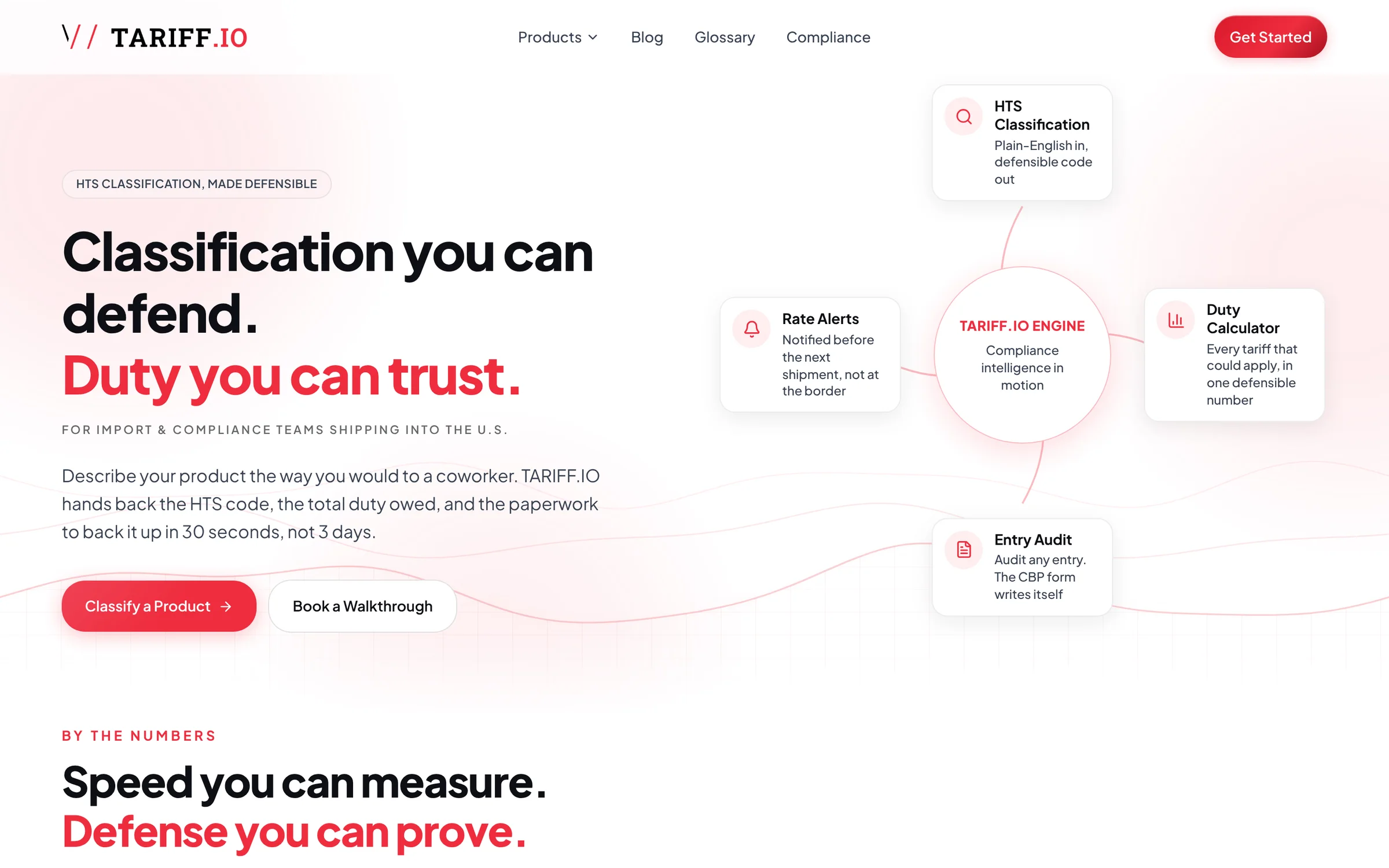
Designing TARIFF.IO, an agentic AI platform that makes every U.S. tariff decision defensible
- UX designer & researcher
- Agentic AI
- Web app · API · MCP
- Broker in the loop
Overview
One platform for every tariff decision
Every product that crosses into the U.S. needs a 10-digit HTS code, a duty calculation and a customs entry, and tariffs now change faster than most teams can track. TARIFF.IO brings it into one place: classify a product, calculate every duty that applies, generate the CBP Form 7501 and audit entries already filed, with an AI agent that can run the whole path and a broker who signs off when it matters.
- Client
- WorldLink · TARIFF.IO
- My role
- UX Designer & Researcher, end to end
- Timeline
- 2026
- Team
- WorldLink product and engineering
- Tools
- FigmaFigJamClaude Code
Built for
Import and compliance teams shipping into the U.S., and their customs brokersSurfaces
Web app, PORTUS AI agent, REST API and MCP tools
TARIFF.IO is live
Visit TARIFF.IO ↗01 · The problem
One entry. Three risks.
Trade compliance runs on spreadsheets, broker emails and memory. Any single entry can go wrong in three different ways, at three different times.
- Before filingIs the HTS code right?
A container lands and the 10-digit code on the entry was never verified.
- OvernightA tariff action nobody saw
A Federal Register notice changes the rate on your top product while everyone is asleep.
- Months laterThe protest window closes
An audit finally finds the overpayment, after the window to get it back has passed.
One wrong digit compounds
- 01Wrong HTS code
An incorrect classification is filed with CBP at entry.
- 02Duty underpaid
What is owed grows past what was declared, quietly.
- 03CBP audit
Customs can look back across five years of entries.
- 04Penalties escalate
From a multiple of the lost duty up to the value of the goods.
- 2×the lost duty, for negligence
- 4×the lost duty, for gross negligence
- Full valueof the goods, for fraud
Maximum civil penalties for customs violations under 19 U.S.C. § 1592.
The question I designed for
How might a compliance team get a code, a duty and a filing they can defend, in minutes, without giving up the human judgment the rules still require?
02 · Research
Three people, one entry, very different worries
I mapped how a single import moves from a product description to a filed entry, who touches it along the way, and where trust breaks. Three groups kept coming up.
- TCTrade compliance teams
Own the classification and need a reason they can show an auditor, not just a code.
- CBCustoms brokers
Make the final call on uncertain codes and want the evidence in front of them, not in an email thread.
- PFProcurement and finance
Need the true landed cost before they commit to a supplier or a country of origin.
Answers have to come from official data
A tariff answer is only as good as its source, so the product reads straight from the sources CBP itself uses.
- USITC Harmonized Tariff Scheduleevery heading, rate and note
- Federal Registertariff actions and notices
- CBP rulingsthe customs rulings corpus
- Commerce AD/CVD casesantidumping and countervailing
- UFLPA Entity Listforced-labor entity screening
Three principles the research left me with
- 01Real tariff logic
Every answer comes from the official schedule and the rates in force on the entry date, never a guess.
- 02Visible reasoning
The code arrives with its GRI rule, confidence and sources, so anyone can check how it got there.
- 03A human in the loop
When confidence is low, the AI routes the decision to a broker instead of filing it quietly.
03 · Workflows
Before you file. After you file.
Instead of a dashboard of disconnected tools, the product splits into two guided workflows that match the two moments compliance work actually happens.
- 1Classify10-digit HTS code with GRI reasoning
- 2CalculateEvery overlay, the true landed cost
- 3Export summaryA pre-filled CBP Form 7501
- 4WatchlistMonitor the code for rate changes
- 1Upload the 7501Every field extracted automatically
- 2Run the auditAgainst the rates in force on the entry date
- 3Review findingsRecovery, exposure and fee errors
- 4Export or send to brokerHand off with one click
One record per workflow, carried step by step. Each step reads what the step before it produced, so nothing is re-keyed.
04 · Before you file
From a product description to a filing-ready 7501
A step rail on the right always shows where you are, what is done, and what comes next.
A six-stage pipeline runs in view. The result shows the recommended HTS code, confidence and GRI rule, and at 76% it is routed to a broker instead of auto-releasing.
05 · After you file
Audit any entry. Find what was over or underpaid.
Upload a filed 7501 and every field is extracted. The audit checks each line against the rates in force on the entry date and lays the findings out by type, so recovery and exposure are clear at a glance.
Findings are colour-coded compliant, mismatch or error, each with the declared value, the correct value and the difference, and an export or broker hand-off at the end.
06 · PORTUS agent
PORTUS: it plans, it acts
PORTUS is an agent that sits on top of every module. Give it a goal in plain English and it plans the steps, calls the same tools as the guided workflow, and stops for review where the workflow would.
Import 200 kitchen knives from China, and get them ready to file.
The agent shows its work in the chat: the code, confidence tier, GRI rule and session ID, with buttons to calculate duty or send to broker review right there.
07 · API & MCP
Bulk in, answers back. Your agents, our tools.
The same engine is open to the systems and AI agents a company already runs.
REST API · your systems
Send whole files from ERP and logistics systems; get structured answers back.
- Bills of materials
- Commercial invoices
- Packing lists
- Product master
- classify
- calculate
- audit
MCP server · your AI agents
Approved agents call the tools; every call is authenticated and logged.
- Procurement agent
- Compliance copilot
- Finance assistant
- classify()
- calculate()
- audit()
- monitor()
08 · Review & monitor
AI does the heavy lifting. A broker makes the call.
Low-confidence classifications land in a broker queue with everything needed to decide. After filing, the watchlist keeps every code in view.
A queue with status counts up top; each item opens to the candidate codes, scores and reasoning, with approve or override in one place.
Enterprise-ready from day one
- Tenant isolationEach customer’s data walled off
- Row-level securityEnforced in the database
- Immutable audit logEvery calculation and decision recorded
09 · Outcome
Every tariff decision, defensible
TARIFF.IO is live: one connected platform where a product description becomes a code, a duty, a filing and an audit trail, with reasoning you can show and a person who can sign off.
- 4tools: classify, calculate, audit, monitor
- 2guided workflows, before and after filing
- 1agent, PORTUS, on top of every module
- APIand MCP tools for your systems and agents
- ✓broker review built into the flow
What I learned
- 1In compliance, the reason is the product
A code without its reasoning is a liability. Designing the evidence trail mattered as much as designing the answer.
- 2Confidence needs a next step
Showing 76% is not enough. Every confidence level had to lead somewhere: continue, check, or send to a broker.
- 3Agents need the same guardrails as people
PORTUS uses the same tools, rules and review steps as the guided workflow, so the fast path is never the risky path.
show your work, even at the border :)
Next project
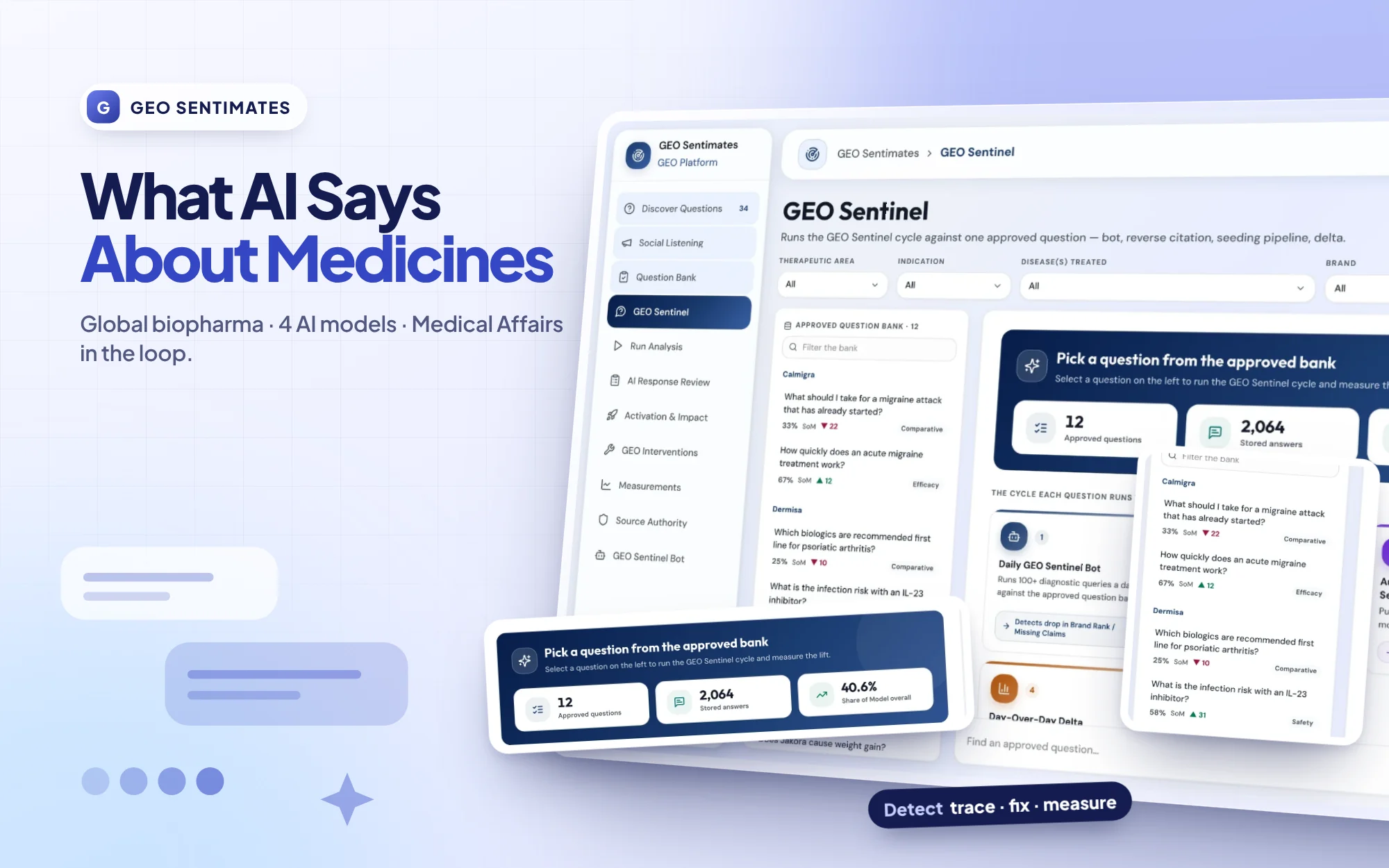 Global biopharma · Generative engine optimisationDesigning how a pharma brand sees, and changes, what AI says about its medicinesFour AI models, one connected loop and Medical Affairs in it.View case study →